Subscribe

Subscribe to get our the latest stories in your inbox.

  • A New Tax Break for VA Loan Users in 2026: What Veterans Need to Know

    If you are a Veteran, active-duty service member, National Guard or Reserve member, or eligible surviving spouse, there is good news worth sharing.

    Starting with the 2026 tax year, eligible borrowers who pay a VA funding fee on a VA-backed or VA direct home loan may be able to deduct that fee on their federal income taxes. This means the deduction generally applies to taxes filed in early 2027. It does not apply to the 2025 tax year simply because you file those taxes in 2026.

    The change was made possible by the One Big Beautiful Bill Act, which permanently restored the federal deduction for mortgage insurance premiums. The VA funding fee qualifies under this restored deduction.

    The deduction is helpful, but it has important rules. Here is what you need to know before filing.

    What is the VA funding fee?

    The VA funding fee is a one-time fee paid by many borrowers who use a VA-backed or VA direct home loan to:

    • Buy a home
    • Build a home
    • Improve or repair a home
    • Refinance a mortgage

    The fee helps offset the cost of the VA home loan program to taxpayers. In return, the program provides valuable benefits, including the ability to purchase a home with no down payment in many cases and no monthly private mortgage insurance.

    The VA funding fee is separate from your interest rate, lender charges, appraisal fee, and other closing costs. It is calculated as a percentage of the loan amount, not the sales price of the home.

    Abstract VA home-loan document, check mark, and tax form icons in a clean red, white, and blue design

    What are the typical VA funding fee rates?

    Your exact fee depends on the loan type, whether you have used your VA home loan benefit before, and the amount of your down payment.

    For VA-backed purchase and construction loans, the official VA chart lists these typical rates:

    Loan use Down payment Typical funding fee
    First use Less than 5% 2.15%
    First use 5% or more 1.5%
    First use 10% or more 1.25%
    After first use Less than 5% 3.3%
    After first use 5% or more 1.5%
    After first use 10% or more 1.25%

    For VA-backed cash-out refinance loans, the typical rates are:

    • 2.15% for first use
    • 3.3% after first use

    For an Interest Rate Reduction Refinance Loan (IRRRL), also called a VA Streamline Refinance, the funding fee is typically 0.5%.

    These rates can vary by loan type and individual circumstances. Review the VA funding fee and closing costs page or ask your lender to confirm the rate that applies to your loan.

    How do borrowers pay the fee?

    Borrowers generally have two options.

    1. Finance the fee

    You can include the funding fee in the total loan amount. The fee is then paid over time as part of the mortgage balance and monthly payment.

    Financing the fee may reduce the amount of money you need at closing. However, adding it to the loan also means you may pay interest on that amount over time.

    2. Pay the fee at closing

    You may also pay the entire funding fee out of pocket when the loan closes.

    Whether and how the fee can be deducted depends on your individual tax situation, how the fee was paid, the type of loan, and current IRS rules. Keep your closing documents and ask a qualified tax professional how the fee should be handled.

    Who is exempt from the VA funding fee?

    Some borrowers do not pay the VA funding fee at all. If you were exempt and no fee was charged, there is no funding fee to deduct.

    According to the VA, you may be exempt if you meet one of these conditions:

    • You receive VA compensation for a service-connected disability.
    • You are eligible to receive VA compensation for a service-connected disability but receive military retirement pay or active-duty pay instead.
    • You receive certain Dependency and Indemnity Compensation, or DIC, as an eligible surviving spouse.
    • You are a service member with a proposed or memorandum rating before closing showing eligibility for compensation because of a pre-discharge claim.
    • You are currently serving on active duty and provide evidence of having received a Purple Heart on or before the loan closing date.

    More than half of Veterans who received a VA-guaranteed home loan since 2021 were exempt from paying the funding fee.

    If you believe you should have been exempt, review your loan documents and contact your lender or the VA Loan Guaranty Service. In some cases, a refund may be possible if a service-connected disability award is made retroactive to before the loan closing date.

    How does the new deduction work?

    The VA funding fee is treated as deductible mortgage interest for this purpose. However, the deduction is available only if you itemize deductions on Schedule A of Form 1040.

    That means you must choose itemized deductions instead of taking the standard deduction.

    This distinction matters. The standard deduction is significant for many taxpayers. If your total itemized deductions are not greater than the standard deduction, itemizing may not lower your taxable income. In that situation, you may not receive a practical tax benefit from the funding fee deduction even though the fee qualifies under the rules.

    The deduction generally applies when the VA loan is used for a primary or secondary residence. Investment or nonqualified property situations may be treated differently. Confirm your property and loan details with a tax professional.

    What about the income phase-out?

    The deduction phases out for higher-income taxpayers.

    As a general IRS guideline, the phase-out generally begins at:

    • $100,000 of adjusted gross income for single filers
    • $50,000 of adjusted gross income for married taxpayers filing separately

    The deduction is generally fully phased out at:

    • $109,000 of adjusted gross income for single filers
    • $54,500 of adjusted gross income for married taxpayers filing separately

    These amounts and rules should be confirmed for your filing status and tax year. Do not rely on a general article to determine your final deduction.

    What documents should you save?

    Start a file for your VA loan and keep the documents that show the funding fee and how it was paid.

    Save:

    1. Your Loan Estimate.
    2. Your Closing Disclosure or other closing statement.
    3. Any HUD-1 statement, if applicable.
    4. Your mortgage statements.
    5. Documents showing whether the funding fee was financed or paid at closing.
    6. A copy of VA Form 26-8937, if it was used to document your exemption status.

    If you paid the fee out of pocket, your tax professional will determine how it should be reported. If the fee was rolled into the loan, the deduction is generally claimed over the life of the loan as part of the interest paid. The exact treatment can depend on the loan and current IRS guidance, so ask a tax professional before filing.

    Abstract folders, closing disclosure, calendar, and secure checkmark in a red, white, and blue educational design

    A simple checklist for tax season

    Use these steps to get organized:

    1. Confirm that your loan closed in or applies to the 2026 tax year.
    2. Verify whether you paid a VA funding fee.
    3. Check whether the fee was financed or paid at closing.
    4. Locate the funding fee amount on your closing documents.
    5. Compare your potential itemized deductions with the standard deduction.
    6. Review the income phase-out rules for your filing status.
    7. Ask a qualified tax professional or use reputable tax software.
    8. Keep copies of the documents supporting your return.

    This new deduction is one more reason to review the true cost of a VA loan carefully. It does not eliminate the funding fee, and it does not guarantee a tax refund. It may reduce taxable income for eligible borrowers who itemize and meet the applicable rules.

    How this relates to Operation T.A.G.

    The federal VA funding fee deduction is completely separate from the Hometown Hero Credit, a non-profit program of Operation T.A.G., a 501(c)(3) project of the High Desert Community Foundation.

    For eligible Veterans, active-duty service members, reservists, and Gold Star surviving spouses, the Hometown Hero Credit may provide a 2% credit up to $21,000 toward eligible home purchase or refinance costs, with no repayment required and subject to program rules.

    The 2% credit up to $21,000 may help with closing fees, buying down the interest rate, paying real estate agent fees, or, in some cases, paying down debt to help with VA loan qualification. It cannot be used for a down payment or non-loan purposes. The 2% credit up to $21,000 is calculated on the loan amount, not the sales price.

    The Hometown Hero Credit is not a tax deduction, and Operation T.A.G. does not provide tax advice. Ask your lender and tax professional how these separate programs may apply to your situation.

    The key takeaway is simple: If you paid a VA funding fee in 2026, save your documents and ask about the deduction when preparing your federal return in 2027. If you were exempt, you avoided the fee but have no fee to deduct.

    Disclaimer: This article is educational information only. It is not tax, legal, or accounting advice. Tax rules can change, and individual results vary. Consult a qualified tax professional about your specific situation before claiming any deduction.

    Sources

    Brett Stacy
    National Director & Founder of the Hometown Hero Credit, a program of Operation T.A.G. (Tangible Act of Gratitude), and 501(c)(3) non-profit project of HDCF

    Operation T.A.G. logo

    Operation T.A.G.
    760-456-8748 : 24-hour Information Line
    www.OperationTAG.org
    www.HometownHeroCredit.com

    Free Mission Homeownership PDF E-Book

    Scan the QR code below for a separate educational homeownership resource.

    Mission Homeownership free PDF e-book QR code

  • Sunday Legacy Letters: No Filter ,  Why God Wants the Real You

    When I think about friendship, I often think about Ricky Hayes.

    Ricky was my best friend in junior high school. He lived several streets away, and we were nearly inseparable. We walked to school together. We spent Saturday mornings sitting quietly in front of the television, comfortable enough that we did not need to fill every moment with conversation. We explored the Mission Inn. We talked about girls during hot summer afternoons near Fairmount Park. We even shared the kind of innocent, carefree adventures that only seem possible during boyhood summers, including skinny-dipping in the woods.

    Nothing about our friendship needed to be polished.

    I did not have to prepare my words before speaking to Ricky. I did not have to pretend to be more confident, more successful, or more put together than I really was. We could talk about serious things, silly things, embarrassing things, and important things. We could sit in silence. We could laugh until our sides hurt.

    Most of all, I could be myself.

    There were no filtered conversations. No holding back. Ricky knew me, and I knew him. That kind of friendship is a gift because it gives you a place where you can be fully known and still loved.

    Over the years, I have realized that this is also the kind of relationship God desires with us.

    God does not need a polished version of you

    Many of us have learned how to sound acceptable when we pray.

    We know how to say the right phrases. We know how to express gratitude. We know how to ask for wisdom, strength, healing, and protection. Those prayers matter. But sometimes we use familiar words to avoid telling God what is really happening inside us.

    We may say, “I’m doing fine,” when we are exhausted.

    We may say, “I trust You,” while quietly feeling afraid.

    We may say, “Everything will work out,” while carrying anger, disappointment, grief, or confusion that we have not acknowledged.

    God is not asking us to pretend.

    He already knows what is in our hearts. He knows the questions we are afraid to ask. He knows the frustrations we believe are too disrespectful to say aloud. He knows when our faith feels strong and when it feels fragile.

    Because He knows us completely, we do not have to hide from Him.

    We can come to Him as we are.

    Two simple notebooks and headphones suggesting a comfortable, honest childhood friendship

    Psalm 77 gives us permission to be honest

    Psalm 77 begins with a prayer that is anything but polished. The psalmist is distressed, restless, and desperate for God’s attention.

    In The Message, Psalm 77:1–2 begins:

    “I yell out to my God, I yell with all my might…”

    The psalm continues by describing a soul that is hurting and unwilling to accept shallow comfort. You can read the passage in full through Psalm 77 at Bible Gateway.

    I appreciate the honesty of this psalm.

    The writer does not begin by pretending everything is fine. He does not hide his distress behind religious language. He cries out. He searches for God in the middle of trouble. He reaches toward God during the night when comfort does not come easily.

    That is not a failure of faith.

    It is an expression of faith.

    The psalmist is hurting, but he is still turning toward God. He is confused, but he is still seeking God. He has questions, but he is bringing those questions into God’s presence instead of walking away.

    There is a difference between complaining about God and bringing our complaints to God.

    Psalm 77 shows us what it looks like to bring our real emotions to the One who can receive them. God is not threatened by our honesty. He does not become less loving because we admit that we are disappointed. He does not turn away because we confess that we are afraid.

    He invites us to come closer.

    Authentic prayer begins with the truth

    When Ricky and I talked, we did not need a script. We could begin wherever we were.

    Our conversations might start with something ordinary and end with something personal. We could move from joking about school to talking about the future. The safety of the friendship made honesty possible.

    Prayer can begin the same way.

    You do not need the perfect opening sentence. You do not need to organize every thought before you speak. You can begin with what is true.

    Try starting your prayer with one of these simple statements:

    • “God, I am angry about…”
    • “God, I am afraid of…”
    • “God, I do not understand…”
    • “God, I am tired of carrying…”
    • “God, I need help with…”
    • “God, I am grateful for…”
    • “God, I miss…”
    • “God, I am not sure what to do next…”

    The point is not to make the prayer sound impressive.

    The point is to stop hiding.

    An open journal beside a window at night, symbolizing an unfiltered prayer reaching toward God

    God can handle your questions

    There have been times when I wanted to come to God with confidence but could only come with questions.

    Why did this happen?

    How long will this continue?

    What am I supposed to learn from this?

    Did I miss something?

    Is God still listening?

    Questions like these can make us feel guilty. We may think that a faithful person should never struggle with uncertainty. But Psalm 77 reminds us that a person can be deeply troubled and still be deeply connected to God.

    The psalmist’s questions are not evidence that God has been forgotten. They are evidence that God is still the person he is seeking.

    That has encouraged me many times.

    God is not asking us to bring Him conclusions when we are still trying to understand the situation. He welcomes us while we are still processing. He meets us in the middle of the uncertainty.

    Sometimes the most faithful prayer is not a confident declaration. Sometimes it is simply, “God, I am here. Please hear me.”

    Honest prayer does not end in despair

    Psalm 77 begins in distress, but it does not remain there forever.

    As the psalm continues, the writer begins remembering God’s faithfulness. He looks back at what God has done. He remembers God’s power, presence, and care. The pain is not dismissed, but it is placed alongside a larger story.

    This is important.

    Authentic prayer is not about staying trapped in our pain. It is about bringing our pain into God’s presence. We tell the truth about what hurts, and then we allow God to meet us there.

    Sometimes the change is immediate. Sometimes it is gradual. Sometimes the circumstances remain difficult, but our understanding begins to shift. We remember that today’s struggle is not the whole story.

    A winding path moving from deep blue shadows into warm morning light, symbolizing lament moving toward hope

    When I think back on my friendship with Ricky, I remember how much freedom came from being known. I did not have to wonder whether I could tell him the truth. I knew there was room for the real conversation.

    God offers us an even deeper kind of safety.

    He knows every part of us already. He knows our history, our motives, our weaknesses, and our hopes. Nothing we say will surprise Him. Nothing we confess will make Him discover that we are less worthy of love than He thought.

    We can approach Him without a filter.

    A simple way to pray today

    If you are not sure how to begin, try this:

    1. Name what you are feeling.
      Use one honest word: afraid, angry, lonely, tired, grateful, confused, hopeful.

    2. Tell God why you feel that way.
      Speak plainly. You do not need to soften every sentence.

    3. Share what you need.
      Ask for wisdom, comfort, patience, courage, forgiveness, or help.

    4. Pause and remain present.
      You do not have to rush to fill the silence.

    5. Remember one evidence of God’s faithfulness.
      It may be something from yesterday, years ago, or a moment when someone showed you unexpected kindness.

    You may not feel different immediately. That is okay. Prayer is not a performance measured by how quickly your emotions change. Prayer is relationship.

    It is coming to God honestly and remaining open to His presence.

    Today, approach God as you would approach a dear friend who has always made room for the truth. Tell Him what is really on your heart. Hold nothing back. Let your prayer be unfiltered, knowing that He already knows you completely and still welcomes you with open arms.

    And if you have received that kind of grace, look for one small way to extend it to someone else. A listening ear, a patient response, or a simple act of gratitude can become a tangible reminder that people do not have to carry everything alone.

    With gratitude,

    Brett Stacy
    National Director & Founder of the Hometown Hero Credit, a program of Operation T.A.G. (Tangible Act of Gratitude), and 501(c)(3) non-profit project of HDCF

    Operation T.A.G. logo

    Free Educational Homeownership Resource

    For readers who would like a practical resource for their homeownership journey, download the free Mission Homeownership PDF e-book. This is a separate educational resource created to help military families understand the home-buying process.

    QR code to download the free Mission Homeownership PDF e-book

    Websites: www.OperationTAG.org and www.HometownHeroCredit.com
    Phone: 760-456-8748 ( 24-hour Information Line)

  • New VA Housing Assistance Could Cover Up to 10 Months of Rent and Utilities

    If you are a Veteran facing an eviction, utility shutoff, or loss of transportation, this update may give you another reason to contact the VA early.

    Recent 2026 reporting describes expanded VA housing-stability assistance that could help eligible homeless Veterans and Veterans participating in HUD-VASH with rent and utilities for up to 10 months. However, this is not an automatic entitlement for every Veteran. Eligibility, funding, allowable expenses, duration, and local procedures may vary.

    The VA’s official August 2026 announcement confirms a new $29 million fund for eligible homeless Veterans and HUD-VASH participants. The fund may provide goods, services, emergency supplies, technology, and transportation. It does not, by itself, establish a universal 10-month rent benefit or a guaranteed cash payment.

    That distinction matters. It helps Veterans understand what may be available without creating false expectations.

    Why early assistance matters

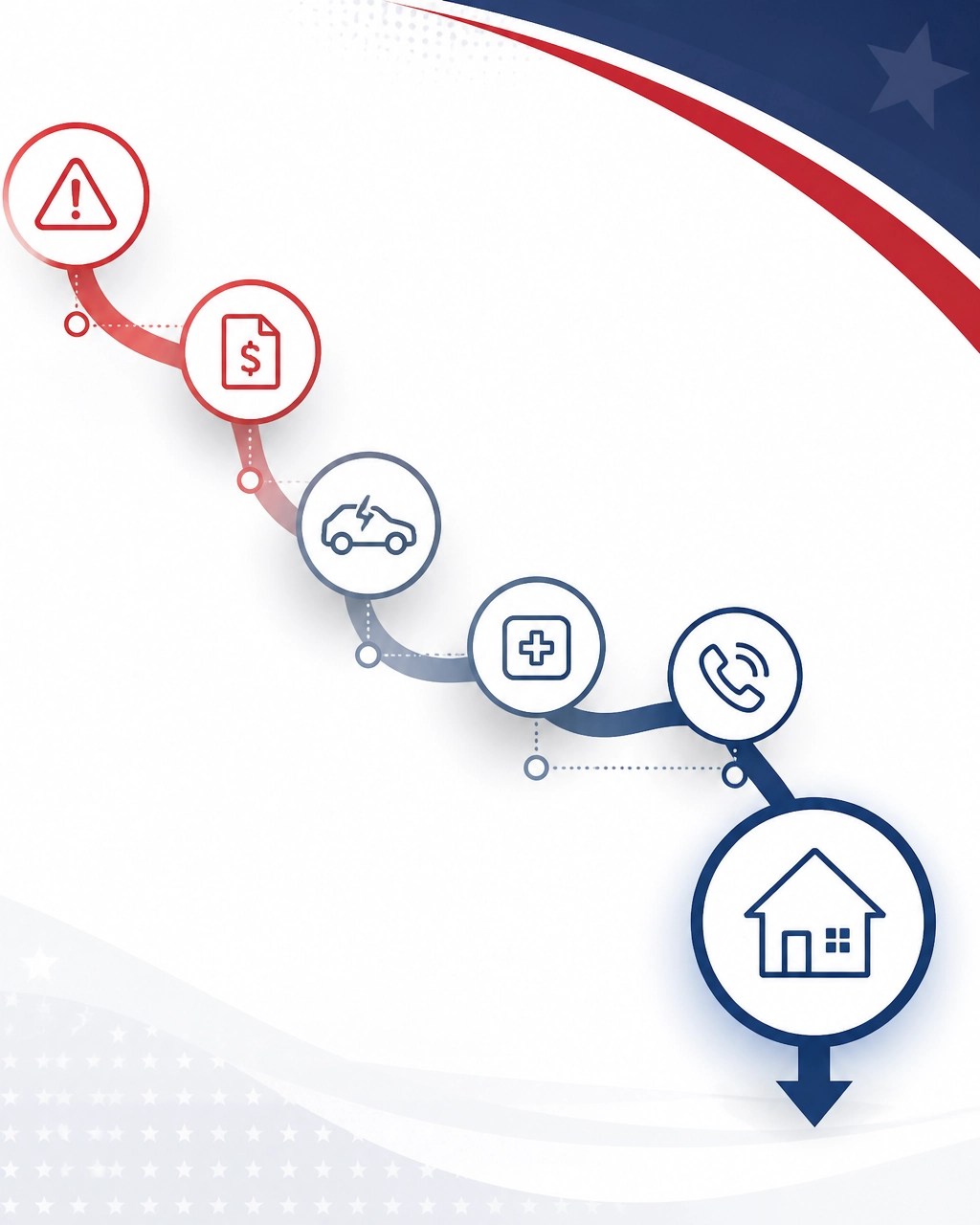
    Homelessness does not always begin with sleeping outside. It may start with one missed rent payment after:

    • A vehicle breaks down.
    • A medical expense uses available savings.
    • A job ends unexpectedly.
    • A utility bill becomes past due.
    • Transportation problems make it difficult to reach work or medical appointments.
    • A family experiences a sudden change in income.
    • A landlord issues an eviction notice.

    A small financial crisis can become a housing emergency when there is no time or money to recover.

    Early assistance may help a Veteran stay connected to housing, healthcare, work, and family support. Asking for help before an eviction or utility shutoff is not failure. It is a practical step toward protecting your housing.

    Abstract timeline showing rent notices, utility bills, transportation, medical care, and a support call leading to a secure home

    What the 2026 VA announcement says

    On August 14, 2026, the VA announced a $29 million fund authorized through the Senator Elizabeth Dole 21st Century Veterans Healthcare and Benefits Improvement Act.

    According to the official announcement, the program may provide eligible Veterans with:

    • Food, shelter, clothing, blankets, and hygiene supplies.
    • Technology such as tablets, smartphones, or disposable phones to help Veterans connect with providers, landlords, and family members.
    • Transportation to medical appointments, counseling, housing searches, employment opportunities, and locations where food and supplies are available.
    • Other goods and services recommended through VA programs and clinicians.

    The VA stated that up to $11 million in goods and services would be distributed through VA medical centers upon clinician recommendation. The announcement also described up to $18 million in free transportation services, subject to contracting and implementation.

    The VA expects medical centers to begin providing certain goods and services in early fiscal year 2027. Local availability may differ.

    What does “up to 10 months” mean?

    Some 2026 reporting has described possible rent and utility assistance for eligible homeless Veterans and Veterans in HUD-VASH for up to 10 months.

    The exact length and type of assistance may depend on:

    • Your eligibility.
    • Whether you are homeless or at imminent risk of homelessness.
    • Whether you participate in HUD-VASH or another VA housing program.
    • A clinician or case manager’s assessment.
    • The rules used by your local VA medical center.
    • Available funds and approved expenses.
    • Your housing plan and other resources.

    The 10-month description should therefore be treated as a possible maximum reported for certain eligible situations, not a guaranteed benefit.

    Assistance is generally coordinated through VA programs, clinicians, case managers, and community providers. It is not a guaranteed cash payment sent directly to every Veteran.

    If you need help now, do not wait for the new fund to become available. Existing VA homeless programs may provide support today.

    VA programs you may encounter

    You do not need to know which program is right for you before calling. A VA counselor or housing specialist can help identify the appropriate resource.

    Supportive Services for Veteran Families

    Supportive Services for Veteran Families, or SSVF, helps eligible Veteran families prevent homelessness or move quickly into housing after becoming homeless.

    Services may include short-term financial assistance, landlord communication, case management, housing search support, and referrals to healthcare, employment, and community services.

    HUD-VASH

    HUD-VASH combines HUD rental assistance with VA case management and supportive services. It is designed to help eligible homeless Veterans obtain and maintain permanent supportive housing.

    The new assistance described in 2026 reporting does not replace HUD-VASH. It may provide additional, time-limited help for eligible participants and other eligible homeless Veterans.

    Grant and Per Diem

    The Grant and Per Diem, or GPD, program supports transitional housing and related services for Veterans experiencing homelessness.

    Transitional housing may provide a safe place to stay while a Veteran works with providers on healthcare, employment, benefits, and a longer-term housing plan.

    Health Care for Homeless Veterans

    Health Care for Homeless Veterans, or HCHV, connects homeless Veterans with outreach, healthcare, residential services, and other support.

    Health needs and housing needs often affect each other. A Veteran may need medical care, mental-health support, substance-use treatment, or transportation before maintaining stable housing becomes possible.

    National Call Center for Homeless Veterans

    The National Call Center is available to Veterans who are homeless or at imminent risk of homelessness.

    Call 877-424-3838. The line is free, confidential, and available 24 hours a day, seven days a week.

    You can also contact your VA social worker, local VA medical center, or HUD-VASH housing case manager.

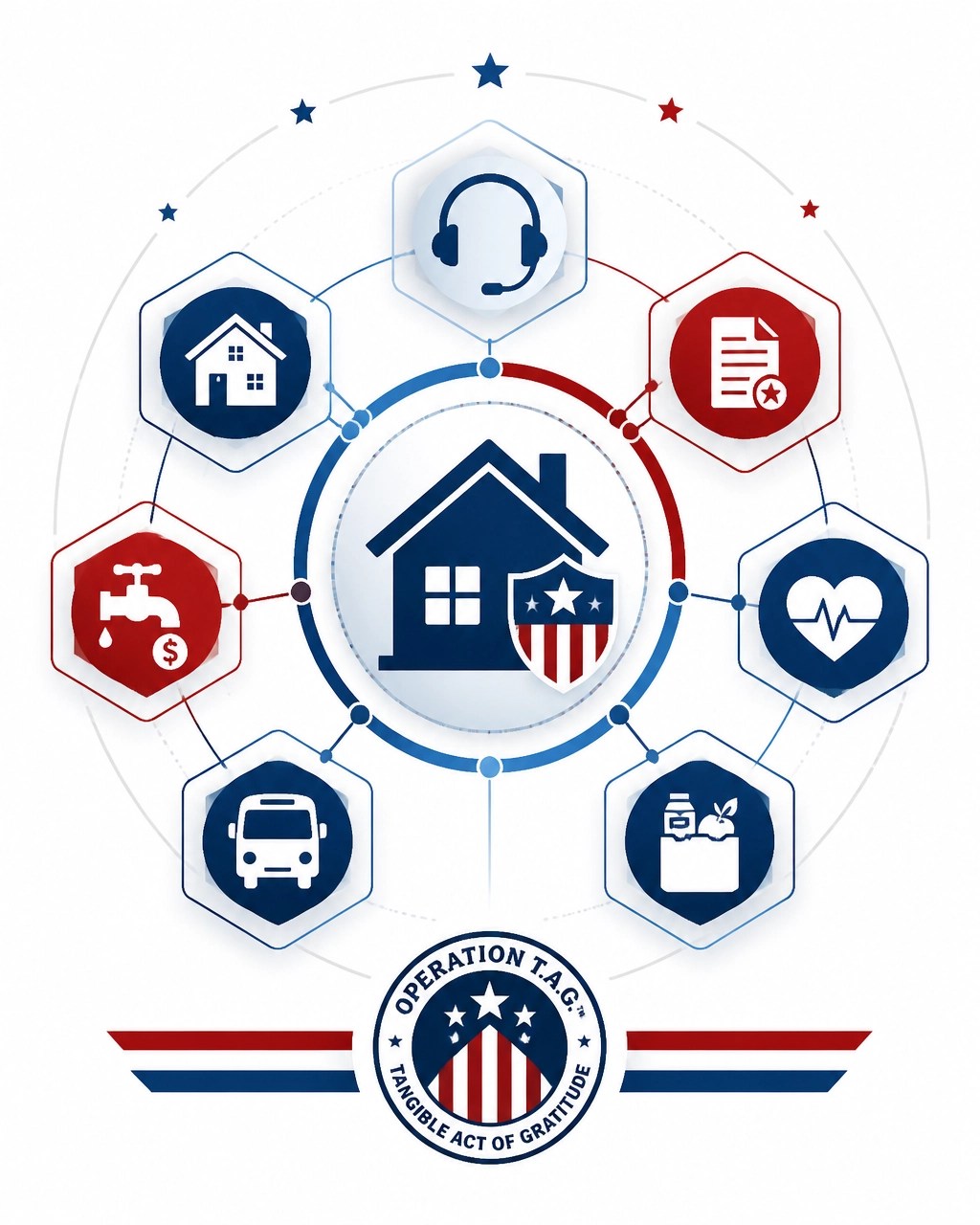
    Connected icons representing VA case management, housing, rent, utilities, transportation, food, healthcare, and documents leading to a secure home

    What to do now

    Use this checklist if your housing is at risk:

    1. Call before an eviction or utility shutoff whenever possible. Contact the National Call Center at 877-424-3838. Do not wait if you are already without safe housing.
    2. Explain the exact risk. Tell the counselor whether you have an eviction notice, a utility shutoff notice, no safe place to stay, a vehicle problem, or an upcoming medical appointment you cannot reach.
    3. Gather documents if they are available. These may include a lease, rent ledger, eviction notice, utility bill, shutoff notice, identification, or income information.
    4. Do not delay an emergency while gathering paperwork. Call first if you need immediate shelter, transportation, or safety support.
    5. Ask which program is handling your case. It may be SSVF, HUD-VASH, GPD, HCHV, or another VA or community program.
    6. Ask specific questions. Ask whether rent, utilities, transportation, emergency lodging, food, or other needs may be covered in your situation.
    7. Keep copies of everything. Save notices, applications, emails, names, phone numbers, and appointment information.
    8. Follow up with your assigned case manager. Ask about the next action, required documents, and the expected timeline.

    Visit the VA’s Homeless help resource page or the VA Homeless Programs page for additional information.

    What this assistance does not mean

    This announcement does not mean every Veteran will receive 10 months of rent or utilities.

    Keep these points in mind:

    • Not every Veteran qualifies.
    • Funds and services are subject to eligibility and availability.
    • Local VA medical-center procedures may differ.
    • The assistance is not a guaranteed 10-month cash payment.
    • Covered expenses may vary by program and individual assessment.
    • The assistance does not replace permanent housing or a personal housing plan.
    • It does not replace benefits counseling, healthcare, employment support, legal assistance, or case management.

    A counselor can explain which options apply to your situation.

    Prevention and homeownership are different stages

    Housing stability comes first. If you are facing homelessness, contact VA homeless services rather than treating a home purchase program as an emergency solution.

    Later, when an eligible Veteran, active-duty service member, or Gold Star surviving spouse is stable and considering a home purchase or refinance, the Hometown Hero Credit, a non-profit program of Operation T.A.G., in partnership with PRMG, may provide a 2% credit up to $21,000, with no repayment required, subject to program rules.

    The 2% credit up to $21,000 is calculated on the loan amount, not the sales price. It may be applied to closing fees, buying down the interest rate, real estate agent fees, or, in some cases, paying down debt to help with VA loan qualification. It cannot be used for a down payment or non-loan purposes. VA loans generally do not require a down payment.

    Operation T.A.G. (Tangible Act of Gratitude) is a 501(c)(3) nonprofit project of the High Desert Community Foundation, partnered with PRMG, the nations 10th largest residential lender and a top VA loan provide. We believe gratitude must become action. Our mission is to provide education and tangible support rather than empty “thank you for your service” messaging.

    The Hometown Hero Credit, a non-profit program of Operation T.A.G., is separate from VA homeless programs. Operation T.A.G. does not administer VA homeless services or approve VA assistance.

    A trustworthy next step

    If you are homeless or at imminent risk, call 877-424-3838 today. Explain what is happening and ask to be connected with the right local program.

    You do not need to solve the entire situation before making the call. Start with the immediate housing risk. The VA counselor, social worker, or case manager can help identify the next step.

    Sources

    Disclaimer: This article is for educational information only. VA programs, eligibility requirements, covered expenses, payment methods, duration, funding, and local availability can change. This article is not a guarantee of assistance or individualized legal, financial, medical, or VA benefits advice.

    Brett Stacy
    National Director & Founder of the Hometown Hero Credit, a program of Operation T.A.G. (Tangible Act of Gratitude), and 501(c)(3) non-profit project of HDCF

    Operation T.A.G. logo

    Operation T.A.G. Contact Information
    Phone: 760-456-8748
    Websites: OperationTAG.org and HometownHeroCredit.com

    Separate Educational Homeownership Resource

    The free Mission Homeownership PDF e-book is an educational resource for military families considering homeownership. It is not a VA homeless-services application and does not guarantee assistance or eligibility.

    QR code for the free Mission Homeownership PDF e-book

  • The VA Just Changed Its Appraisal Rules: What Homebuyers Need to Know in 2026

    If you are planning to buy a home with a VA-backed loan, recent appraisal updates may make the process clearer and reduce some avoidable delays.

    The U.S. Department of Veterans Affairs updated its Minimum Property Requirements, or MPRs, in the VA Lenders Handbook, Pamphlet 26-7, Chapter 12. The goal is to help Veterans compete in today’s housing market while keeping important safety and property standards in place.

    These changes do not remove the VA appraisal. They also do not guarantee that a home, borrower, or loan will be approved. They update specific requirements that have sometimes added time, cost, or confusion to the process.

    What changed in the VA appraisal requirements?

    The VA identified several long-standing MPR topics for revision. Here is what the updates mean in plain English.

    1. The full radon gas requirement was removed

    The VA removed the full radon gas requirement listed under Topic 34.

    This does not mean radon is no longer a concern. It means radon testing or certification is not automatically required in every situation under the revised VA appraisal guidance.

    You can still request a radon test as part of your inspection and purchase process. Testing may be especially important in areas where radon is more common or when your inspector identifies a reason for additional evaluation.

    A VA appraisal is not a substitute for a radon test or a complete home inspection.

    2. Standards were revised for homes built before and after 1978

    Topic 32 now includes revised guidance for properties built before 1978 and properties built in 1978 or later.

    The updated approach is designed to focus attention on actual property concerns instead of automatically treating every minor condition the same way.

    For older homes, lead-based paint and other genuine hazards may still require attention. For newer homes, certain cosmetic conditions may no longer create an automatic VA repair requirement.

    Your lender and appraiser will determine how the current guidance applies to the property. The home’s age, condition, construction, and specific defects still matter.

    3. Guidance for detached improvements was streamlined

    Topic 1 was updated to streamline guidance for detached improvements and Specially Adapted Housing Regional Loan Center jurisdiction.

    Detached improvements can include structures such as:

    • Detached garages
    • Sheds
    • Workshops
    • Barns
    • Fences
    • Other separate improvements

    The revised guidance may reduce situations where a detached structure creates an automatic appraisal condition. However, that does not mean you should ignore the structure.

    A detached building could still affect your safety, maintenance costs, insurance, property use, or overall decision to purchase. Your home inspector can help you evaluate those issues.

    4. Guidance for non-vented heaters was updated

    The VA also updated Topic 23 regarding non-vented heaters.

    This change may reduce delays caused by paperwork or certification requirements for certain heating equipment. The equipment still needs to be evaluated under applicable standards, and safety remains important.

    Ask your inspector to review the heating system, ventilation, installation, and visible condition. If the system raises a concern, bring it to your lender and real estate professional promptly.

    Abstract appraisal report, home outline, magnifying glass, and value scale in a red, white, and blue geometric style

    Appraisal fees and timelines are also being adjusted

    The VA is adjusting appraisal fees in select regions. The purpose is to keep the program competitive and help maintain a qualified pool of experienced appraisers.

    Fees can vary by location. Ask your lender for the current appraisal fee that applies to the property you are considering.

    As of May 31, the average VA appraisal took approximately seven business days. That figure is an average, not a promise.

    Your timeline may be different because of:

    • Local appraiser availability
    • Property location
    • Property type and complexity
    • Lender processing time
    • Scheduling access to the home
    • Requests for additional information
    • Repairs or follow-up questions

    Ask for a realistic timeline before making an offer. Build flexibility into your contract when possible.

    What did not change?

    The VA appraisal still serves two important purposes.

    First, it helps establish whether the property’s market value supports the proposed loan. Second, it evaluates whether the property meets applicable VA standards for basic acceptability, including important safety, structural, and sanitation concerns.

    The appraisal is not a complete inspection. It does not guarantee that the home is free from defects. It does not predict future value. It does not replace your responsibility to understand the home’s condition.

    Your lender will also review your income, credit, assets, debts, and other underwriting requirements. The VA appraisal and lender underwriting are separate parts of the loan process.

    The updated rules may streamline certain reviews. They do not waive all property standards, guarantee approval, or make every property eligible for VA financing.

    Why these changes matter in a competitive market

    A smoother appraisal process can help reduce uncertainty for a prepared VA buyer. It may also help prevent a transaction from being delayed over a requirement that no longer applies in the same way.

    That can be useful when sellers are comparing multiple offers.

    However, speed should never replace due diligence. A buyer should not skip an inspection because the appraisal rules changed. A buyer should not assume that a home is safe simply because the appraisal is completed. A buyer should also avoid waiving important protections without understanding the consequences.

    The strongest VA offer is not simply the fastest offer. It is an offer supported by preparation, clear communication, appropriate contingencies, and professionals who understand the VA loan process.

    A practical checklist for VA homebuyers

    Use these steps to prepare.

    1. Get fully preapproved

    A prequalification may be based on basic information. A full preapproval generally involves a more detailed review by the lender.

    Ask what documents are needed and what conditions must be satisfied before you make an offer.

    2. Ask which current rules apply

    Ask your lender how the updated MPR and appraisal guidance applies to the property.

    Also ask when the appraisal was ordered. The revised handbook guidance applies to appraisals ordered under the updated requirements. Your lender can explain how the order date affects your transaction.

    3. Work with VA-experienced professionals

    Choose a real estate agent and lender who regularly work with VA buyers.

    They should be able to explain the appraisal process, contract timelines, repair concerns, and communication procedures without relying on outdated assumptions about VA loans.

    4. Schedule an independent home inspection

    A VA appraisal is not a home inspection.

    Hire an independent, qualified home inspector to evaluate the home’s systems and condition. Depending on the property, you may also want specialized inspections for radon, termites, roofing, plumbing, electrical systems, or structural concerns.

    5. Ask about Tidewater and reconsideration of value

    Ask your lender and agent how they would handle Tidewater if the appraiser believes the property may not support the contract price.

    Also ask about the process for a reconsideration of value if the appraisal comes in below the purchase price. Your lender can explain what information may be submitted and what deadlines apply.

    6. Set realistic appraisal and closing dates

    Do not rely only on the seven-business-day average. Ask about current local conditions and the lender’s processing timeline.

    A clear schedule helps you plan inspections, financing conditions, moving arrangements, and rate-lock decisions.

    7. Review the appraisal and raise questions promptly

    When the appraisal is available, review it with your lender and agent. Ask questions about the value conclusion, comparable properties, reported condition, and any remaining repair requirements.

    Prompt communication can help keep the transaction moving.

    Geometric four-step visual showing preapproval, lender discussion, inspection, and timeline preparation without people or readable text

    Know the difference between value, price, and repairs

    These three items are related, but they are not the same.

    • Purchase price: The amount agreed upon by the buyer and seller.
    • Appraised value: The appraiser’s opinion of the property’s market value based on comparable sales and other relevant factors.
    • Repair requirements: Work that may be needed to address applicable VA standards, lender requirements, or concerns identified during the transaction.

    A home can have a purchase price that is different from its appraised value. If the appraised value is lower than the purchase price, your lender and agent can explain the available options. The updated VA rules do not automatically eliminate an appraisal gap.

    Likewise, an appraisal may identify certain issues without providing the detailed condition assessment you would receive from a full inspection. Review both carefully.

    A separate support option from Operation T.A.G.

    Operation T.A.G. (Tangible Act of Gratitude) is a 501(c)(3) nonprofit project of the High Desert Community Foundation, partnered with PRMG, the nations 10th largest residential lender. Its Hometown Hero Credit is a non-profit program that may help eligible Veterans, active-duty service members, and Gold Star surviving spouses purchase or refinance a home.

    Eligible participants may qualify for a 2% credit up to $21,000, subject to current program eligibility and applicable rules. Through its partnership with PRMG, the program is intended to provide tangible support during the home financing process.

    The 2% credit up to $21,000 is calculated on the loan amount, not the sales price. It may be used for eligible closing fees, prepaid costs, a rate buydown, or real estate agent fees. In some cases, it may help pay down debt to support VA loan qualification.

    The credit cannot be used for a down payment or for non-loan purposes. VA loans generally do not require a down payment, but that does not eliminate closing costs, prepaid expenses, inspections, moving costs, or other responsibilities.

    The Hometown Hero Credit is not a replacement for the VA appraisal. It does not guarantee loan approval, eliminate lender underwriting, or automatically solve an appraisal gap. Ask your qualified lender how any available credit may be applied within the rules of your loan and transaction.

    Prepare early and use the benefit you earned

    The VA’s 2026 appraisal updates may reduce certain avoidable delays and make the process easier to understand. They do not remove the need for careful preparation.

    Get fully preapproved. Ask questions early. Use experienced professionals. Schedule an independent inspection. Review the appraisal promptly. Compare your options before making final decisions.

    With the right information and support, you can approach your VA home purchase with greater confidence and a clearer plan.

    Sources

    Educational disclaimer: VA appraisal rules, eligibility requirements, underwriting standards, fees, timelines, and program availability can change. This article is for general educational purposes only. It is not a commitment to lend or individualized financial advice. Consult a qualified VA lender, real estate professional, and independent home inspector for guidance about your situation.

    Brett Stacy
    National Director & Founder of the Hometown Hero Credit, a program of Operation T.A.G. (Tangible Act of Gratitude), and 501(c)(3) non-profit project of HDCF.

    Operation T.A.G. Hometown Hero Credit nonprofit logo

    Operation T.A.G. Contact Information
    Phone: 760-456-8748 : 24-hour Information Line
    Website: OperationTAG.org
    Website: HometownHeroCredit.com

    Free Homeownership Education Resource

    QR code for the free Mission Homeownership PDF e-book

    Scan the QR code to access the free Mission Homeownership PDF e-book. This is a separate homeownership education resource. It is not a loan application, lending decision, financial advice, or guarantee of assistance.

  • Sunday Legacy Letters: Being Pantsed : Learning Whom to Trust

    Some memories stay with us because of what happened. Others stay because of who was present: and who was not.

    I remember my first week of junior high school vividly. I was a freshman, and within those first few days, I quickly learned to avoid certain places. I stayed away from bathrooms where older students gathered. I avoided the locker room unless it was time for physical education. I kept clear of hidden corners where younger students could be targeted without anyone noticing.

    I tried to stay where a teacher could see me.

    At that age, I believed an adult would come to my rescue if I needed help. I thought being within sight of a teacher meant I was protected.

    By the end of that first week, I learned that being seen and being helped are not always the same thing.

    A painful lesson from junior high

    Near the wood-shop classroom, two older classmates grabbed me and held me down. One removed my shoes and pants while another threw my shoes onto the roof. They then attempted to put me headfirst into a steel trash can.

    They were unable to lift me into it because I was too heavy. That failure led to a cruel nickname: “Beach ball with fingers.”

    I remember feeling fortunate that I was not thrown headfirst into the trash can, as some other freshmen had been. But being fortunate does not make what happened acceptable. It was not harmless. It was not a rite of passage. It was bullying, humiliation, and abuse of power.

    The wrongdoing belonged to the students who attacked me. It did not belong to me.

    The most painful part came when I realized the wood-shop teacher had witnessed the entire incident. I called out for help. His response was:

    “There’s only one person holding you. Take care of your own business.”

    Then he walked back into class.

    That sentence stayed with me for years. It taught me something I did not want to learn so early: Sometimes the person you expect to help you will not help you.

    It also taught me to pay attention to whom I trust.

    When people fail us

    There are moments in life when our faith is tested. Fear can surround us like raging waters. We may feel exposed, trapped, or alone. Sometimes the people we expect to protect us are absent. Other times, they are present but choose not to act.

    Those experiences can affect how we see the world. They can make us cautious. They can make us question authority. They can make it difficult to ask for help again.

    Those responses are understandable.

    When someone has failed to protect you, it may take time to trust wisely. That does not mean you are weak. It means something important was broken, and healing often requires patience.

    The story of my first week in junior high was not evidence that I was unworthy of protection. It was evidence that other people made wrong choices.

    That distinction matters.

    When someone mistreats us, shame often tries to move in. It tells us that we should have been stronger, faster, louder, or somehow different. But the responsibility belongs to the person who caused the harm: and to the adults who failed to respond appropriately.

    The Lord is not like the teacher who walked away

    Human beings can fail us. God does not abandon His children.

    That does not mean faith prevents every painful event. It does not mean believers will never be bullied, betrayed, disappointed, or afraid. Scripture does not make those promises. David’s life certainly did not reflect an easy path.

    David faced enemies, betrayal, danger, and seasons when he had to run for his life. Yet he continued to return to God as his source of strength.

    Psalm 18:2 says:

    “The LORD is my rock, my fortress and my deliverer; my God is my rock, in whom I take refuge, my shield and the horn of my salvation, my stronghold.”

    Read Psalm 18:2 slowly.

    A rock is steady. A fortress provides refuge. A shield stands between a person and danger. A deliverer brings someone out of trouble.

    These descriptions do not suggest that David never experienced danger. They show where David turned when danger came.

    God’s presence is not dependent on whether another person chooses to help. He does not become distracted. He does not walk away because our pain is inconvenient. He does not measure our worth by the opinions of people who mistreat us.

    When human beings fail, the Lord remains faithful.

    Thoughtful devotional illustration of an open Bible beside a stone and calm light, symbolizing Scripture, prayer, and God’s steady presence

    Where does our help come from?

    Psalm 121 begins with a question:

    “I lift up my eyes to the mountains: where does my help come from?”

    Then the psalmist answers:

    “My help comes from the LORD, the Maker of heaven and earth.”

    You can read Psalm 121:1–2 in its full context.

    The answer is not that help comes from having perfect circumstances. It is not that every authority figure will respond correctly. It is not that every person we trust will prove trustworthy.

    Our ultimate help comes from the Lord, the Maker of heaven and earth.

    That truth does not remove the need for wise human support. We should still seek safe people, responsible leaders, counselors, pastors, family members, and friends who will listen and act with integrity. We should still protect children and speak up when someone is being harmed.

    Trusting God does not mean ignoring danger or refusing help from others. It means recognizing that no human being can occupy God’s place in our lives.

    People should be trusted wisely. God can be trusted completely.

    God can free us from the traps that ensnare us

    Some experiences become traps long after the event has ended.

    A cruel nickname can remain in our thoughts. A dismissive sentence can become an inner voice. A betrayal can make us believe that no one is safe. Fear can keep us from taking healthy risks or accepting genuine care.

    But God is able to lead us out of those traps.

    Psalm 124 describes the Lord’s protection this way:

    “We have escaped like a bird from the fowler’s snare; the snare has been broken, and we have escaped.”

    The psalm concludes:

    “Our help is in the name of the LORD, the Maker of heaven and earth.”

    You can read Psalm 124:1–8 and reflect on its picture of danger, deliverance, and renewed trust.

    The psalm does not pretend the snare was imaginary. It does not deny that danger existed. It celebrates the fact that the trap did not have the final word.

    That is an important hope for anyone who has been mistreated.

    What happened to you may be part of your story, but it does not have to become the definition of your life. The words spoken against you do not determine your identity. The failure of an adult does not mean every adult will fail. The betrayal of one person does not prove that trust is impossible.

    God can strengthen you as you learn to trust again.

    Symbolic devotional artwork showing a strong rock and fortress beside flowing water becoming calm, representing refuge and deliverance

    Learning whom to trust

    That first week of junior high taught me to be more careful about where I went and whom I trusted. As I grew older, I learned that trust should not be given simply because someone is older, more powerful, or placed in a position of authority.

    Trust is demonstrated through consistent character.

    A trustworthy person listens when you speak. They do not minimize your fear. They do not blame you for someone else’s wrongdoing. They do not ask you to handle serious harm alone. They use their position to protect, guide, and serve.

    This is also a lesson worth passing to the next generation:

    1. Tell the truth about what happened.
      Do not call cruelty harmless simply because it was common or tolerated.
    2. Remember where responsibility belongs.
      The person who causes harm is responsible for that harm. The person who witnesses it and refuses to help may also carry responsibility for that failure.
    3. Seek safe support.
      If you or someone you know is being harmed, speak with a trusted adult, counselor, pastor, advocate, or appropriate authority.
    4. Let God rebuild your confidence.
      Human failure can wound your ability to trust, but it does not change God’s character.
    5. Keep your eyes on the Lord.
      As David did, return to God as your rock, refuge, shield, and deliverer.

    Faith is not pretending that painful things did not happen. Faith is trusting that God remains present when they do.

    A legacy of trust

    When I look back on that frightened freshman, I do not see someone who deserved what happened. I see a young person trying to find safety in an environment where older students misused their strength and an adult failed to intervene.

    I also see how God has carried me through the years.

    The Lord did not approve of what happened. He did not need the pain to be called good before He could bring good from my life. He met me in the confusion, the humiliation, and the questions. Over time, He taught me that people may fail, but He will not leave me defenseless or abandon me in the middle of the struggle.

    David’s resilience came from repeatedly turning toward God. That same invitation is available to us.

    Trust in the Lord today. Lift your eyes to Him. Let His presence steady you when fear feels like raging water. Let His wisdom guide you toward safe and trustworthy people. Let His strength help you release the names, labels, and failures that were placed upon you by others.

    Your ultimate source of help is the Lord, the Creator of heaven and earth.

    And He can strengthen you on your journey.


    Brett Stacy
    National Director & Founder of the Hometown Hero Credit, a non-profit program of Operation T.A.G. (Tangible Act of Gratitude), and 501(c)(3) non-profit project of HDCF.

    Operation T.A.G. logo

    Operation T.A.G.
    Website: OperationTAG.org
    Phone: 760-456-8748

    Separate Free Homeownership Resource

    The resource below is separate from this devotional. Scan the QR code to access the free Mission Homeownership PDF e-book.

    QR code for the free Mission Homeownership PDF e-book

    Mission Homeownership is an educational homeownership resource. The Hometown Hero Credit is a non-profit program that provides a 2% credit up to $21,000 to help eligible military families buy or refinance a home. The credit may be applied to closing fees, buying down the interest rate, real estate agent fees, or, in some cases, paying down debt to help with VA loan qualification. It cannot be used for a down payment or non-loan purposes. The 2% credit is calculated on the loan amount, not the sales price. VA loans generally do not require a down payment. Program terms and availability may vary.

  • When “Supporting Veterans” Becomes a Marketing & Business Model

    If you are a veteran, active-duty service member, or military family member, you have probably seen the advertising.

    “We understand veterans.”

    “We’re here for those who served.”

    “Military families are our mission.”

    The message often comes with American flags, military imagery, and patriotic language.

    There is nothing inherently wrong with a business earning a profit while serving veterans. Loan officers, real estate agents, and companies have employees to pay and services to provide.

    But there is an important question worth asking:

    Are military families being served: or are they being used as a profitable marketing audience?

    That question has received renewed attention following a lawsuit involving Veterans United Home Loans. Regardless of how that case is ultimately resolved, it raises a broader issue about trust, transparency, and what genuine support should look like.

    Abstract illustration showing recommendation and incentive separated by a transparent divider

    The lawsuit in plain English

    Veterans United Home Loans is a private mortgage company that focuses heavily on VA loans. It is not the Department of Veterans Affairs and is not a government agency. Its name and branding should not be confused with official VA programs.

    Veterans United also has an affiliated real estate operation called Veterans United Realty.

    According to reporting about a proposed class action filed in federal court, Veterans United Realty provided homebuyer leads to participating real estate agents. When a referred buyer purchased a home, the agent could pay approximately 35% of the agent’s commission to a Veterans United-affiliated company.

    A referral fee between real estate brokers is not automatically illegal. The purpose and structure of the arrangement matter.

    The lawsuit alleges that participating agents were encouraged to keep the veteran’s mortgage with Veterans United Home Loans. It further alleges that sending a borrower to another lender could affect the agent’s access to future leads.

    Put simply, the borrowers’ allegations describe an arrangement that worked like this:

    1. An affiliated company provided potential buyers to real estate agents.
    2. The agent paid approximately 35% of the commission when a referred buyer closed.
    3. The agent was allegedly expected to help keep the buyer’s mortgage business within the same company network.
    4. Agents who did not follow that expectation allegedly risked losing future leads.

    The plaintiffs claim these practices created an undisclosed financial conflict and caused borrowers to pay more than they might have paid after comparing other lenders.

    Those are allegations. They have not been proven.

    Veterans United disputes the claims and maintains that its business arrangement complies with federal law. The court’s decision to allow part of the case to continue is not a finding of guilt or liability. It means the court determined that some claims could proceed for further consideration.

    You can read additional reporting from Mortgage Professional America. The legal process will determine what happened and whether any laws were violated.

    The larger issue is trust

    The lawsuit is about specific parties and specific allegations. The larger issue is one every military family should understand.

    When a real estate agent, lender, or other professional recommends a company, ask:

    Is this recommendation based on what is best for my family: or is there a financial incentive behind it?

    Buying or refinancing a home is one of the largest financial decisions many families will make.

    Rates matter.

    Fees matter.

    Closing costs matter.

    Service matters.

    The ability to compare lenders matters.

    A recommendation may be completely appropriate. A referral relationship may be properly disclosed and legally structured. But military families should not have to guess whether a recommendation is independent or financially influenced.

    Transparency gives consumers the information they need to make an informed decision.

    Your VA benefit is not the same as your lender

    A VA loan is a benefit earned through service. A mortgage lender is a private business.

    For most VA-backed mortgages, the Department of Veterans Affairs does not directly lend the money. Private banks, mortgage companies, and credit unions generally make the loans, while the VA guarantees a portion of eligible loans.

    The official VA home loan page explains the basic structure and eligibility process.

    This distinction matters because one lender’s VA loan is not automatically identical to another lender’s VA loan.

    Lenders may differ in:

    • Interest rates
    • Origination charges
    • Closing costs
    • Lender credits
    • Underwriting procedures
    • Communication and service
    • Experience with your specific financial situation

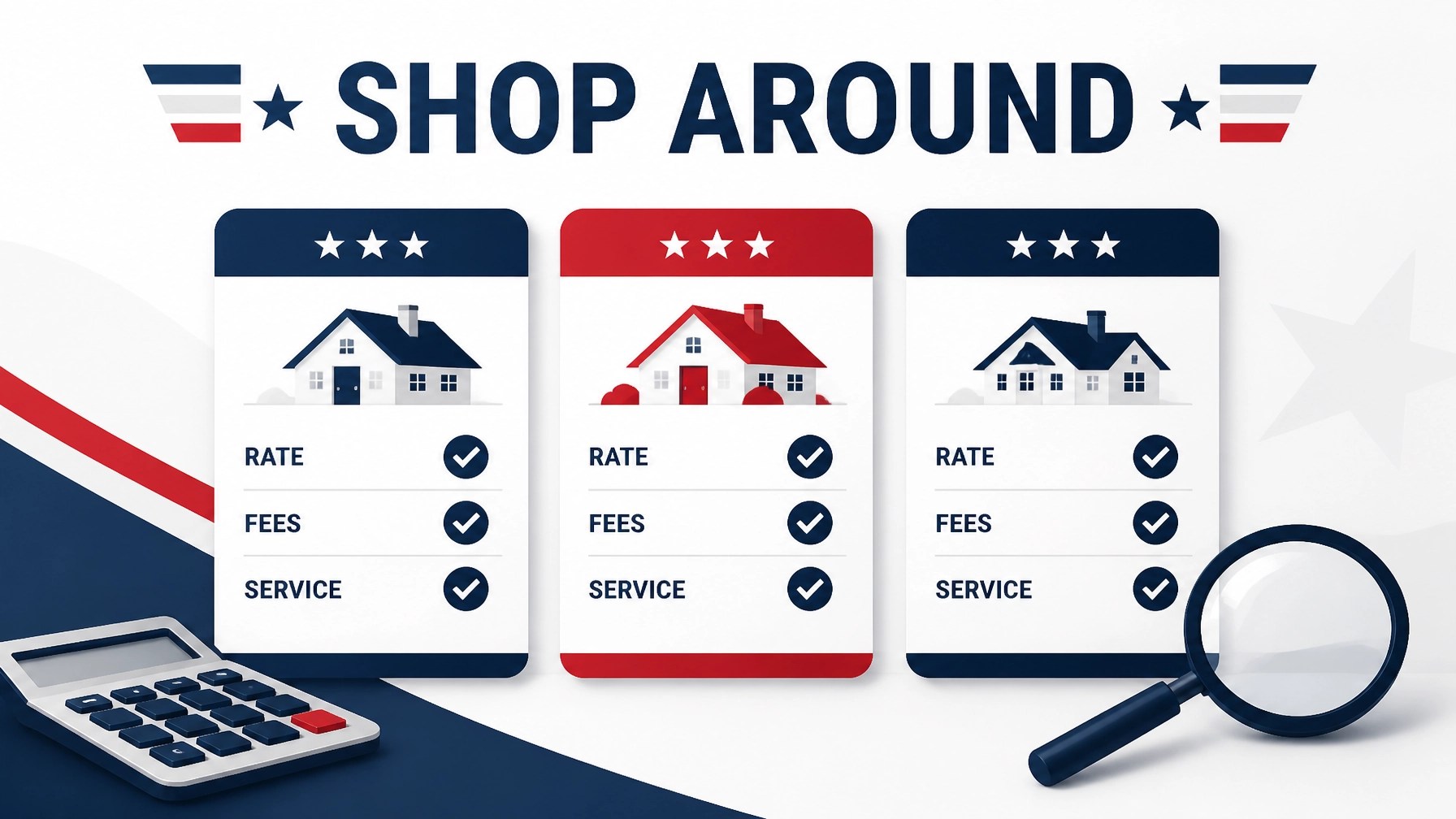
    You have the right to shop around.

    A preapproval from one lender does not require you to close with that lender. A referral from a real estate agent does not make that lender your only option. A military-sounding company name does not establish government affiliation.

    For many eligible borrowers, VA loans generally do not require a down payment. That does not mean the loan has no costs or that every lender will provide the same terms.

    Ask one direct question

    If someone recommends a lender, real estate company, insurance provider, or other service, ask:

    “Does anyone receive money, leads, referrals or another financial benefit if I use this company?”

    That is not being difficult.

    It is being an informed consumer.

    You can also ask:

    • Is this company affiliated with the Department of Veterans Affairs?
    • Does anyone receive compensation if I choose this lender?
    • Are there lender credits available?
    • How is the loan officer or agent compensated?
    • Can I compare this Loan Estimate with another lender’s Loan Estimate?
    • What happens if I choose a different company?

    You do not owe any business your choice simply because its advertising includes military language.

    Patriotism creates responsibility

    Veterans and military families are often more likely to trust a company that appears to understand their service.

    That trust is valuable. Businesses know it.

    A company can create an emotional connection before discussing a rate, fee, or contract simply by using words such as “veteran,” “military,” or “service.” Flags and military imagery can reinforce that connection.

    There is nothing inherently wrong with military-focused branding. A company may genuinely specialize in serving veterans.

    But patriotism should not replace transparency.

    If a business builds its model around America’s military families, those families should be more than a target market. They should receive clear information, honest choices, and meaningful service.

    Geometric illustration of mortgage offer cards with rate, fees, and service comparison labels

    Profit is not the problem

    I spent my career in the mortgage industry. I believe loan officers should be compensated. Real estate agents should be compensated. Companies must earn revenue to operate.

    Profit is not a dirty word.

    The problem begins when profit is placed ahead of the person while the company advertises that the person comes first.

    Those are two very different things.

    Genuine service means educating military families. It means showing them their options. It means encouraging them to compare rates and fees. It means disclosing financial relationships clearly.

    It also means being willing to recommend a different solution when that solution is genuinely better for the family.

    That is what integrity looks like in a service-based business.

    Gratitude over profits

    This is one reason we created Operation T.A.G.: Tangible Act of Gratitude.

    Operation T.A.G. is a 501(c)(3) nonprofit project of the High Desert Community Foundation dedicated to education, financial support, and community partnership for military families.

    The Hometown Hero Credit is a non-profit program of Operation T.A.G. It provides eligible veterans, active-duty service members, and Gold Star surviving spouses a 2% credit up to $21,000, with no repayment required, subject to program eligibility and applicable rules.

    The 2% credit up to $21,000 can help an eligible military family buy or refinance a home. It may be applied toward:

    • Closing fees
    • Buying down the interest rate
    • Real estate agent fees
    • In some cases, paying down debt to help with VA loan qualification

    The credit cannot be used for a down payment or for non-loan purposes. It is calculated on the loan amount, not the sales price. Since VA loans generally do not require a down payment, families should ask qualified professionals how the credit may fit within their specific transaction.

    The Hometown Hero Credit is a non-profit program, but that does not mean it is automatically the right option for every family. Military families should still compare loan terms, review disclosures, and seek qualified guidance.

    The point is simple: gratitude should have something tangible behind it.

    Geometric illustration representing gratitude over profits with a home icon and balanced mission symbols

    What military families should do

    Before choosing a lender or service provider:

    1. Ask about financial incentives. Use the direct question: “Does anyone receive money, leads, referrals or another financial benefit if I use this company?”
    2. Request multiple Loan Estimates. Compare the same type of loan and review the interest rate, projected payments, closing costs, and cash needed to close.
    3. Ask about lender credits. Understand whether a credit reduces your upfront costs and whether it affects your interest rate.
    4. Ask how professionals are compensated. Request a clear explanation of agent, loan officer, referral, and other compensation arrangements.
    5. Verify VA-related claims. Use VA.gov to confirm official information about eligibility and VA loan programs.
    6. Do not assume affiliation. A company name, logo, flag, or military message does not make a business part of the Department of Veterans Affairs.
    7. Take time to compare. A referral can be a starting point. It should not be the end of your research.

    The allegations in the Veterans United lawsuit still must be proven, and Veterans United deserves the opportunity to defend its practices. This article is educational and is not legal or financial advice. Consult qualified legal, financial, lending, and real estate professionals about your individual circumstances.

    If a company says it supports veterans, it should be ready to explain how.

    Not what its advertising says.

    Not how many flags appear on its website.

    Not how often it says, “Thank you for your service.”

    The question is:

    What tangible benefit are military families receiving because you chose to serve them?

    That is the difference between marketing gratitude and putting gratitude into action.

    Brett Stacy
    National Director & Founder of the Hometown Hero Credit, a program of Operation T.A.G. (Tangible Act of Gratitude), and 501(c)(3) non-profit project of HDCF.

    Operation T.A.G. Hometown Hero Credit nonprofit logo

    Websites: www.OperationTAG.org and www.HometownHeroCredit.com
    Phone: 760-456-8748 : 24-hour Information Line


    Separate Educational Resource

    Download the free Mission Homeownership PDF e-book for educational information about the homeownership process.

    QR code for the free Mission Homeownership educational PDF e-book

  • Sunday Legacy Letters: A Beachball With Fingers

    Thank you for joining me for another Sunday Legacy Letter. Today’s story takes me back to 1971, to a school parking lot, a painful nickname, and a lesson I did not understand until much later.

    “Go get ’em, Tiger”

    As my dad drove me to my first day of junior high school, he offered the kind of encouragement fathers often give their sons.

    “Go get ’em, Tiger.”

    I remember rolling my eyes before stepping out of the car.

    At the time, I thought his words were embarrassing. I had no idea they would soon be overshadowed by words that hurt much more.

    My new classmates began calling me “beachball with fingers.” The nickname was aimed at my weight, but it affected far more than my appearance. The teasing became relentless. In time, the bullying became physical.

    By eighth grade, my father had seen enough. He saw the torn shirts. He saw the bruised lips. He saw what the experience was doing to me: and to our family.

    Dad decided something had to change.

    Finding strength

    We found a karate studio nearby and enrolled together.

    The first days were difficult. Training challenged me physically and mentally. I was not used to the discipline, the repetition, or the effort required to improve. But I continued.

    Over time, I lost 35 pounds. I became more agile. I gained confidence. I also developed a fierce determination that had not been there before.

    Tae Kwon Do became my refuge.

    It gave me a place to focus. It gave me a way to build strength. It helped me believe that I was not helpless. For a boy who had been mocked and hurt, that mattered.

    But something else began to happen.

    Tae Kwon Do started consuming my thoughts. My identity became increasingly connected to my ability to fight. The discipline that had helped me became the center of my attention. I began to carry anger everywhere I went.

    I became mean-spirited.

    I had unknowingly begun to worship at the altar of violence.

    Symbolic illustration of a Tae Kwon Do belt and training mat beside a fractured shadow, with calm light falling across an open Bible marked at Psalm 115

    When strength becomes an idol

    This does not mean martial arts are wrong.

    Disciplines such as Tae Kwon Do can teach focus, self-control, fitness, patience, and responsibility. They can help people become healthier and more confident. Used properly, training can be constructive and honorable.

    The problem was not simply the activity. The problem was what I allowed it to become in my heart.

    Something that began as a tool for protection became a source of identity. Something that helped me regain confidence became tied to anger and violence. I was no longer simply practicing a discipline. I was placing too much trust in it.

    That is where a good thing can become an idol.

    A career can become an idol when our work becomes more important than our relationship with God.

    A relationship can become an idol when another person’s approval becomes the foundation of our worth.

    A hobby can become an idol when it consumes our thoughts, time, and energy while pushing God to the edges of our lives.

    Even success can become an idol when we begin to believe it will protect us, define us, or save us.

    The question is not always whether something is bad. Sometimes the more important question is whether something good has taken the place that belongs to God.

    Psalm 115 and the shape of worship

    Psalm 115 gives us a clear picture of the difference between idols and the Lord.

    The psalm describes idols as objects with mouths that cannot speak, eyes that cannot see, ears that cannot hear, and hands that cannot feel. They may look impressive, but they are lifeless. They cannot provide true help or protection.

    Then comes this warning in verse 8:

    “Those who make them will be like them, and so will all who trust them.”

    That verse reaches beyond ancient statues and carved images. It reveals a principle that still applies today:

    We become shaped by what we worship and trust.

    When I trusted violence to give me security, I became more violent.

    When I looked to anger to make me strong, I became angrier.

    When I allowed Tae Kwon Do to define me, I began to reflect the parts of it that I had placed above everything else.

    The activity did not make every decision for me. I was responsible for my choices. But what I trusted was shaping the person I was becoming.

    That is why Psalm 115 is both a warning and an invitation.

    The warning is that lifeless things cannot give us life. Empty things cannot give us lasting security. The things we trust will shape us, even when we are not paying attention.

    The invitation is to trust the Lord.

    The Lord is our help and protection

    Psalm 115:9–11 calls God’s people to trust the Lord. It repeats the truth that He is our help and our shield.

    That description speaks directly to the fears I carried as a young teenager.

    I wanted protection. I wanted confidence. I wanted to stop feeling helpless. I found some practical help through training, but I looked in the wrong place for my ultimate security.

    Training could teach me how to move. It could not heal my heart.

    Confidence could help me face a difficult situation. It could not tell me who I truly was.

    Anger could make me feel powerful for a moment. It could not provide peace.

    Only God could be my ultimate help and protection.

    Symbolic compass pointing toward a luminous cross while career, relationship, and hobby symbols fade into the background

    What are you trusting?

    This is not a question reserved for people who practice martial arts. It is a question for all of us.

    What has your attention?

    What receives your best time and energy?

    Where do you go first when you feel afraid, rejected, or uncertain?

    What do you believe will finally make you valuable, safe, or complete?

    Your answer may involve your career. It may involve money, health, family, popularity, achievement, or a relationship. It may involve a hobby or a personal goal that began as something positive.

    Again, the issue is not always the thing itself. The issue is whether it has become the thing you trust most.

    God does not ask us to neglect every responsibility or abandon every healthy interest. He calls us to put everything in its proper place.

    We can work hard without worshiping our work.

    We can love our families without placing them in God’s position.

    We can enjoy hobbies without allowing them to define us.

    We can pursue discipline without worshiping our own strength.

    We can learn to defend ourselves without becoming controlled by anger or violence.

    The Lord should remain our source of identity, help, and protection.

    A renewed trust

    Looking back, I can see that my father’s words were not as embarrassing as I thought.

    “Go get ’em, Tiger” was his way of telling me that he believed I could face what was ahead.

    But the deeper lesson is that no father, skill, career, relationship, or personal achievement can take the place of God. Even the best human encouragement has limits. Even the strongest discipline has limits.

    The Lord does not.

    He sees the wounds we carry. He understands the fears beneath our anger. He knows when we are trying to protect ourselves with strength, success, or control. He calls us away from lifeless idols and back to Himself.

    Trusting God does not mean we will never face pain. It means we do not have to let pain become our identity.

    It does not mean we will never need courage. It means our courage can be rooted in the One who is truly faithful.

    It does not mean we abandon discipline. It means we place discipline under God’s direction rather than allowing it to rule our hearts.

    Today, I am grateful for the lessons my past continues to teach me. I am grateful for my father’s concern. I am grateful for the strength I gained. Most of all, I am grateful that God can correct us, redeem our mistakes, and teach us to trust Him again.

    Today, where will you place your trust?


    Separate Free Homeownership Resource

    Operation T.A.G. also offers the free Mission Homeownership PDF e-book as a separate homeownership resource. It is not part of this devotional. Scan the QR code below to access it.

    QR code for the free Mission Homeownership PDF e-book

    Brett Stacy
    National Director & Founder of the Hometown Hero Credit, a non-profit program of Operation T.A.G. (Tangible Act of Gratitude), and 501(c)(3) non-profit project of HDCF
    Websites: www.OperationTAG.org and www.HometownHeroCredit.com
    Phone: 760-456-8748 : 24-hour Information Line

    Operation T.A.G. Hometown Hero Credit nonprofit logo

  • VA Helped Veterans Buy Their Homes. Who Helps Them Stay There?

    If you are a veteran, a military family member, or someone helping an aging veteran plan for the future, thank you for being here.

    There is an important conversation we need to have about veteran homeownership.

    For more than 80 years, the VA Home Loan Guaranty program has helped generations of veterans and military families purchase homes. It has helped service members establish roots, raise families, and build long-term financial stability.

    But those veterans are getting older.

    A young service member who used a VA-backed loan decades ago may now be 70 or 80 years old. The mortgage may be nearly paid off. The home may have significant equity. Yet retirement income may not keep pace with property taxes, homeowners insurance, utilities, healthcare, repairs, groceries, and other costs.

    That raises a serious question:

    If we helped veterans buy their homes, shouldn't we also help them stay there?

    The VA Home Loan Program Helped Build a Foundation

    The VA Home Loan Guaranty program remains one of the nation’s most meaningful benefits for eligible veterans and service members.

    In qualifying circumstances, a VA-backed purchase loan may offer:

    • No down payment when the sales price does not exceed the home’s appraised value and other requirements are met.
    • No monthly private mortgage insurance, or PMI.
    • Competitive terms and interest rates through participating lenders.
    • VA backing that helps reduce lender risk.
    • Potentially fewer closing costs than some other loan options.
    • No penalty for paying the loan off early.

    Eligibility is not automatic. Veterans must meet VA requirements and their lender’s standards for credit, income, occupancy, and other factors. The home must generally be the borrower’s residence.

    You can review the current requirements through the VA’s official purchase loan information and VA home loan eligibility resources.

    The program does what it was designed to do.

    It helps eligible veterans become homeowners.

    But purchasing a home and remaining financially secure in that home are not always the same challenge.

    Thirty, Forty, or Fifty Years Later

    The financial realities of homeownership can change over time.

    A veteran may have purchased a home while working full time. Later, employment income may be replaced by retirement income, Social Security, disability compensation, or other fixed sources.

    At the same time, household expenses can continue rising.

    Property taxes may increase. Homeowners insurance may become more expensive. An aging roof may need replacement. An air-conditioning system may fail. Medical costs may grow. Utilities, groceries, and transportation may take up a larger share of the monthly budget.

    The home may be secure on paper.

    The monthly budget may not be.

    This is where the idea of aging in place becomes important.

    A quiet longtime home with an accessible entry, mature tree, and neighborhood pathway representing aging in place

    Aging in Place Is About More Than a House

    For many older veterans, home is more than an asset.

    It may be the place where children grew up. It may hold decades of memories. It may be close to family, healthcare providers, favorite stores, and trusted neighbors.

    Remaining in that home can provide:

    • Familiar surroundings.
    • Independence.
    • Community connection.
    • Stability.
    • A sense of control during a major stage of life.

    Moving may be the right choice for some homeowners. But it should not be the only option considered simply because monthly income no longer covers every cost of maintaining the home.

    This is the difference between homeownership and housing stability.

    A veteran may own a home and still face the risk of financial pressure, deferred repairs, or housing instability. Helping prevent that crisis may be just as important as helping someone recover after homelessness occurs.

    The “House-Rich and Cash-Poor” Reality

    Consider an example.

    A home might be worth approximately $500,000. The homeowner may owe $75,000: or may have no mortgage at all. On paper, the homeowner may have substantial equity.

    But equity cannot directly pay a grocery bill.

    It cannot pay an electric bill, replace a broken air conditioner, or repair a roof until that equity is accessed through a financial decision.

    That is the situation often described as being house-rich and cash-poor.

    It does not mean the homeowner made a poor decision. It means much of the homeowner’s wealth is tied to the property rather than available as monthly cash flow.

    For some older homeowners, a reverse mortgage may be one option for accessing a portion of that equity while continuing to live in the home.

    It is not the only option. It is not automatically the best option. It deserves careful education and independent guidance.

    What Is a HECM Reverse Mortgage?

    The most common federally insured reverse mortgage is the Home Equity Conversion Mortgage, or HECM.

    A HECM is insured by the Federal Housing Administration, or FHA. It is not a VA loan.

    Generally, HECMs are available to eligible homeowners age 62 and older who meet program requirements. The home must typically be the borrower’s principal residence, and the borrower must satisfy financial and property obligations.

    Depending on the borrower’s circumstances and the option selected, funds may be available through:

    • A line of credit.
    • Monthly advances.
    • A lump-sum distribution, subject to program limitations.
    • A combination of these options.

    A HECM generally does not require monthly principal-and-interest mortgage payments. However, that does not mean the loan is free.

    A reverse mortgage is still a loan.

    Interest and applicable charges accrue. The loan balance generally increases over time. As funds are borrowed and interest accumulates, the remaining equity in the home may decrease.

    The borrower remains responsible for obligations such as:

    • Property taxes.
    • Homeowners insurance.
    • Property maintenance and required repairs.
    • Maintaining the home as a principal residence.
    • Other requirements in the loan documents.

    Repayment is generally triggered when the last borrower permanently leaves the home, sells it, or dies. The specific terms and circumstances matter.

    The U.S. Department of Housing and Urban Development’s HECM information explains the program and provides resources for finding approved counselors. The Consumer Financial Protection Bureau also outlines HECM requirements and alternatives.

    There Is No Comparable VA-Guaranteed Reverse Mortgage

    Today, there is no VA-guaranteed reverse mortgage comparable to FHA’s HECM program.

    An eligible veteran can use a VA-backed home loan to purchase or refinance a home. But an older veteran who wants to explore a federally insured reverse mortgage generally uses the same FHA-insured HECM program available to other qualifying homeowners.

    That leads to an important policy conversation.

    Could a future VA-backed home-equity-conversion program offer protections designed specifically for veterans?

    Could it potentially reduce certain costs? Could it coordinate with existing VA programs? Could it help eligible veterans fund accessibility improvements so they can remain safely at home?

    Could it become another tool for preventing housing instability before a crisis occurs?

    These are questions worth discussing.

    They are not promises. No such VA-specific program currently exists, and a future program would not necessarily be better for every veteran.

    But the needs of aging veterans deserve attention.

    Education Before Product. Options Before Pressure.

    This issue is one reason Operation T.A.G.: Tangible Act of Gratitude created Red, White & Secure™.

    We cannot create a VA reverse mortgage.

    We can, however, help make an existing option easier to evaluate for eligible veterans who determine: after proper education, independent counseling, and professional guidance: that an FHA-insured HECM may be appropriate for their circumstances.

    For eligible veterans age 62 and older, Red, White & Secure™ provides up to $6,000 in waived HECM origination fees.

    This assistance is not intended to persuade anyone to obtain a reverse mortgage. It does not make a HECM appropriate for everyone. It is not a VA reverse mortgage.

    The standard should be simple:

    The objective should never be the loan. The objective should be the veteran.

    Before considering a HECM, a veteran and family should review other possibilities. Depending on the situation, those may include:

    1. Waiting and reassessing the household budget.
    2. Using available state or local property-tax assistance.
    3. Applying for home-repair or utility assistance.
    4. Considering a home equity loan or line of credit.
    5. Refinancing, if the numbers and repayment terms are reasonable.
    6. Downsizing or moving to a more affordable home.
    7. Reviewing available VA, Social Security, healthcare, and other benefits.

    A decision should be based on the veteran’s goals, income, health, family circumstances, housing needs, and long-term plans.

    What Veterans and Families Should Do Next

    If you or an aging veteran in your family is considering home-equity options, start with these steps:

    1. List the current monthly income and expenses. Include taxes, insurance, utilities, healthcare, maintenance, and debt.
    2. Estimate the home’s value and mortgage balance. Do not assume available equity equals available proceeds.
    3. Review alternatives. Look for local assistance programs and other housing or financial options.
    4. Speak with a HUD-approved independent HECM counselor. Counseling is required for a HECM and should happen before selecting a lender or product.
    5. Consult qualified professionals. A financial planner, tax professional, attorney, and housing professional may each identify different considerations.
    6. Ask how benefits may be affected. HECM proceeds and household assets can have implications for certain needs-based programs.
    7. Take time before signing. A major financial decision should never be rushed.

    The goal is not simply to unlock equity.

    The goal is to help a veteran remain safe, informed, and financially secure for as long as possible.

    A Tangible Act of Gratitude

    America made a commitment to veterans when it created a home loan program that helped them become homeowners.

    That commitment helped generations of veterans build homes, families, and communities.

    As those veterans age, our responsibility should continue.

    We should not only ask:

    “How can we help veterans buy a home?”

    We should also ask:

    “How can we help veterans remain securely in that home for as long as they safely and financially can?”

    Sometimes the answer may involve a HECM. Sometimes it will involve a different solution. Sometimes the best answer will be additional counseling, a repair program, a benefits review, or a move to a more manageable home.

    Education comes first.

    Options come before pressure.

    And the veteran must remain at the center of the decision.

    That is a tangible act of gratitude.

    Educational Disclaimer

    This article is for general educational purposes only. HECM eligibility, counseling requirements, costs, interest rates, taxes, legal and financial implications, government-benefit considerations, and loan terms vary according to individual circumstances and program rules. A reverse mortgage is not appropriate for everyone. Before making a decision, consult a HUD-approved independent HECM counselor and qualified financial, tax, legal, and housing professionals. Red, White & Secure™ is not a VA reverse mortgage and does not constitute a recommendation to obtain a HECM, a loan application, or financial, legal, or tax advice.

    Free Retirement Reset E-Book

    Operation T.A.G. offers the free PDF e-book/resource Retirement Reset for older veterans and families exploring retirement, home equity, aging in place, and related financial decisions.

    This resource is for educational purposes only. It is not financial, tax, legal, reverse-mortgage, or VA benefits advice. For guidance specific to your situation, consult qualified financial, tax, legal, mortgage, housing, and VA benefits professionals.

    Free Homeownership Education Resource

    Download the free Mission Homeownership PDF e-book. This is a separate homeownership education resource. It is not HECM advice and is not a loan application.

    Brett Stacy
    National Director & Founder of the Hometown Hero Credit, a program of Operation T.A.G. (Tangible Act of Gratitude), and 501(c)(3) non-profit project of HDCF.

    Websites: www.OperationTAG.org and www.HometownHeroCredit.com
    Phone: 760-456-8748 : 24-hour Information Line

    Operation T.A.G. logo

  • A VA Education Benefit Just Changed: What Military Families Need to Know About Chapter 35

    Welcome, and thank you for taking a few minutes to review this important update. If your family uses, or may qualify for, Chapter 35 Survivors’ and Dependents’ Educational Assistance, also called DEA, one part of the benefit changed on August 1, 2026.

    The most important message is simple:

    Chapter 35 is not ending.

    However, Chapter 35 DEA no longer covers certain secondary-education programs when the program begins on or after August 1, 2026. That change may affect some military and veteran families who were using the benefit for high-school coursework, GED-level training, tutoring, or academic remediation.

    Here is what families need to know and what to do next.

    What Is Chapter 35 DEA?

    Chapter 35 is a VA education benefit for certain eligible spouses and children of veterans or service members.

    A family member may qualify when the veteran or service member:

    • Has a permanent and total service-connected disability.
    • Died as a result of a service-connected condition.
    • Died while serving on active duty or in the line of duty.
    • Is missing in action or was captured in the line of duty.
    • Was forcibly detained or interned by a foreign entity while serving.
    • Meets certain other VA eligibility requirements.

    These are general examples. Not every family member of a veteran or service member automatically qualifies.

    Chapter 35 generally provides a monthly payment directly to the eligible student. The payment can help cover education-related costs or expenses while the student attends an approved program or completes qualifying job training.

    Payment rates vary based on the type of education or training and the student’s enrollment status. The student must also meet applicable eligibility, entitlement, timing, enrollment, and program-approval requirements.

    The VA makes the final determination.

    What Changed on August 1, 2026?

    The change is based on Public Law 117-328.

    According to the VA’s official notice, the law changed the statutory definition of an “educational institution.” It replaced the term “secondary school” with “post-secondary school.”

    In practical terms, Chapter 35 DEA can no longer be used for certain secondary-education activities when the program begins on or after August 1, 2026.

    These activities may include:

    • Certain high-school coursework.
    • GED-level training.
    • Tutoring.
    • Academic remediation.
    • Other approved secondary-level education activities affected by the statutory change.

    This is a change in the scope of covered education. It is not the end of Chapter 35.

    Visual timeline showing the distinction between secondary and post-secondary education after August 1, 2026.

    What Happens If a Student Already Started a Secondary Program?

    The VA has provided a transition rule for students who began an eligible secondary-education program before August 1, 2026.

    If the program began before that date, the student may continue receiving Chapter 35 DEA through the end of the current academic term.

    The academic term could be a semester, quarter, trimester, or another period recognized by the school.

    There is an important limit:

    VA cannot continue paying Chapter 35 benefits for a subsequent secondary academic term, even if that additional term is needed for the student to graduate.

    Families should not assume that existing payments will continue indefinitely. The program start date and the end of the current academic term matter.

    Ask both the VA and the school’s certifying official to review your individual situation.

    What Education Is Still Covered?

    Chapter 35 remains available for eligible spouses and children who pursue qualifying post-secondary education and training.

    Depending on eligibility and program approval, this may include:

    • College and university programs.
    • Certificate programs.
    • Vocational or technical training.
    • Non-college degree programs.
    • Career training.
    • Apprenticeships or on-the-job training.
    • Licensing or certification preparation and testing.
    • Other education and training programs approved by the VA.

    The specific program must qualify under VA rules. A school’s general approval does not necessarily mean every program at that school is approved.

    Before enrolling, use the VA’s GI Bill Comparison Tool and contact the school’s certifying official. That official can help confirm whether the specific program is approved for VA education benefits.

    What Military Families Should Do Now

    If your spouse or child receives Chapter 35 DEA, or you believe someone in your family may qualify, take these steps.

    1. Confirm eligibility

    Review the VA’s official Survivors’ and Dependents’ Educational Assistance page.

    Check whether the veteran or service member meets an eligible condition. Then review the additional requirements for the spouse or child.

    Do not rely on a general statement that someone is “a military dependent.” Eligibility depends on specific VA rules.

    2. Identify the program level

    Determine whether the student’s current or planned program is:

    • Secondary education.
    • Post-secondary education.
    • Vocational or career training.
    • Another type of approved education or training.

    This distinction is especially important after August 1, 2026.

    A program that prepares a student for future college work may still be classified as secondary education. Ask the VA or school certifying official instead of guessing.

    3. Determine when the current term ends

    If a student started an eligible secondary program before August 1, 2026, find out the exact end date of the current academic term.

    Ask the school for this information in writing if possible. Then ask how the transition rule applies to the student’s remaining enrollment.

    Remember that VA may continue benefits only through the end of that academic term. A later secondary term may not be payable.

    4. Speak with the school certifying official

    The school certifying official works with the VA to report eligible enrollment.

    Ask this person:

    • How is the program classified?
    • When did the current term begin?
    • When does it end?
    • Is the next term considered secondary or post-secondary?
    • Is the program approved for Chapter 35 DEA?
    • What enrollment information must be submitted to VA?

    Keep copies of enrollment records and communications.

    5. Review post-secondary options

    If secondary education is no longer covered for a future term, begin reviewing possible next steps.

    Depending on the student’s goals, consider approved:

    • College programs.
    • Certificate programs.
    • Trade schools.
    • Vocational programs.
    • Career-training programs.
    • Apprenticeships.
    • Licensing or certification pathways.

    The change may require planning. Starting early gives the family more time to compare approved programs, application deadlines, enrollment requirements, and available financial resources.

    6. Apply or review benefits through VA

    Eligible dependents can apply using VA Form 22-5490, the Dependents’ Application for VA Education Benefits.

    The form may be completed online or submitted as directed by the VA.

    If you already applied, review the status of your claim and confirm that the VA has the correct school and program information.

    For case-specific assistance, contact the VA through Ask VA or call 1-800-698-2411.

    Do Not Rely on Old Advice

    Benefits information can change.

    Advice that was accurate when an older child attended school may not apply to a younger child. A social media post may leave out an important eligibility condition. A family friend may know what happened in one case but not understand how another case differs.

    Before making enrollment or financial decisions, verify the details directly with:

    1. The VA.
    2. The school certifying official.
    3. An appropriately qualified or VA-accredited representative when additional assistance is needed.

    A benefit unknown or misunderstood is a benefit at risk of going unused.

    The Larger Lesson: Review Earned Benefits Regularly

    Military families manage many programs at once. Education benefits are only one part of the larger system that may include healthcare, survivor benefits, disability compensation, home loan benefits, and state assistance.

    Rules can change. Covered programs can change. Deadlines can matter.

    Set a regular time to review the benefits available to your family. Revisit the information when a child approaches graduation, a spouse begins career training, or the family considers a major educational transition.

    You do not need to understand every rule before asking a question. You only need to gather the basic facts and contact the right source.

    A Tangible Act of Gratitude

    At Operation T.A.G.: Tangible Act of Gratitude: we believe serving military families includes more than saying, “Thank you for your service.”

    Sometimes a Tangible Act of Gratitude means helping a military family pursue homeownership. Sometimes it means helping an aging veteran understand available options. And sometimes it means sharing a timely update about an earned benefit before a rule change creates a financial surprise.

    Operation T.A.G. does not administer Chapter 35 DEA and cannot determine eligibility. Our goal is to help military and veteran families find reliable information and take the next appropriate step.

    Chapter 35 has not ended. The covered education has changed.

    If your family may be affected, confirm your eligibility, identify the program level, check the term dates, speak with the school certifying official, and contact the VA directly. That is the clearest way to protect your family’s options.

    Official Resources

    Disclaimer: This article is for educational purposes only. It is not legal, financial, or VA benefits advice. Eligibility, covered programs, payment rates, entitlement, and transition treatment vary by individual circumstances. Confirm your situation directly with the VA and your school certifying official.

    A Separate Free Homeownership Resource

    Mission Homeownership free PDF e-book QR code

    The Mission Homeownership PDF e-book is a separate, free homeownership resource for active-duty service members, veterans, and surviving spouses. It is not a Chapter 35 application and is not a substitute for VA guidance. Scan the QR code to access it, or visit OperationTAG.org.

    With gratitude,

    Brett Stacy
    National Director & Founder of the Hometown Hero Credit, a non-profit program of Operation T.A.G. (Tangible Act of Gratitude), and 501(c)(3) non-profit project of HDCF

    Operation T.A.G. logo

    Websites: www.OperationTAG.org and www.HometownHeroCredit.com
    Phone: 760-456-8748 ( 24-hour Information Line)

  • They Served Decades Ago. Now Too Many Aging Veterans Are Struggling to Stay Housed.

    Thank you for being here. This is an important conversation, and it deserves our full attention.

    When we hear the words veteran homelessness, many of us picture someone living on the street, staying in a shelter, or searching for a place to sleep.

    That picture is real.

    But homelessness does not always begin in public view.

    Sometimes it begins quietly inside a home.

    It begins when an older veteran living on Social Security or a fixed retirement income watches property taxes, homeowners insurance, utilities, groceries, medical costs, and everyday expenses continue to rise.

    It begins when the air conditioner stops working. When the roof needs repair. When an unexpected bill arrives and there is no money left at the end of the month.

    And sometimes it happens to a veteran sitting inside a home they have owned for 20, 30, or 40 years.

    Homeownership does not always mean financial security

    An older veteran may own a home with substantial equity and still struggle to pay monthly expenses.

    That situation is often described as being “house-rich and cash-poor.”

    The veteran’s wealth is in the home. But the veteran may have very little spendable income available each month.

    This creates a difficult financial reality.

    Selling the home may provide needed funds, but it can also mean leaving a familiar neighborhood, losing stability, or moving farther away from family, medical providers, and community support.

    Remaining in the home may be emotionally and practically important. Yet the costs of remaining there can become harder to manage every year.

    This is why housing stability must include more than helping someone find a home. It must also include helping older veterans understand how they may be able to remain safely and securely housed.

    A quiet older home surrounded by simple symbols of repairs, utilities, and rising housing expenses

    America’s veterans are getting older

    Millions of America’s veterans are now seniors.

    Many served during Vietnam and earlier eras. They came home, went to work, raised families, purchased homes, and helped build the communities where we live.

    They paid their bills. They maintained their properties. They supported their families. They contributed in ways that often went unrecognized.

    Now they are growing older.

    For some, retirement is not unfolding the way they expected. A fixed income may not stretch far enough to cover rising costs. Health needs may increase. Family support may be limited. Home maintenance may become more difficult.

    According to the Department of Veterans Affairs, almost half of the veterans enrolled in VA health care were age 65 or older in fiscal year 2024. The VA has also identified a growing need for housing and supportive services designed around older and disabled veterans.

    This is an issue our country cannot afford to ignore.

    We have made progress: but prevention matters too

    There is genuinely good news.

    The VA reports that veteran homelessness declined by approximately 56% between 2010 and the January 2025 Point-in-Time count. That progress reflects the work of the VA, the U.S. Department of Housing and Urban Development, community organizations, case managers, volunteers, and many others.

    Programs such as HUD-VASH and Supportive Services for Veteran Families have helped veterans obtain housing, avoid homelessness, and connect with supportive services.

    That progress deserves recognition.

    But helping someone after they lose housing is only part of the solution.

    We should also be asking:

    What can we do to help an aging veteran before housing insecurity becomes a crisis?

    For an older veteran homeowner, that conversation should include the resources already available to them: including the equity in their home.

    Could the home become part of the solution?

    For some homeowners age 62 and older, a Home Equity Conversion Mortgage, commonly called a HECM or reverse mortgage, may provide another financial option.

    A HECM is a loan insured through the Federal Housing Administration. It may allow an eligible homeowner to access a portion of the equity accumulated in the home.

    Depending on the homeowner’s circumstances and the loan structure, proceeds may potentially be used to:

    • Supplement retirement income.
    • Establish a line of credit.
    • Pay off an existing mortgage.
    • Address certain qualified financial needs.
    • Improve monthly cash flow while remaining in the home.

    One significant difference from a traditional mortgage is that the homeowner generally does not make monthly principal-and-interest mortgage payments.

    However, that does not mean the homeowner has no financial responsibilities.

    The homeowner must continue to:

    • Pay property taxes.
    • Maintain homeowners insurance.
    • Keep the property in acceptable condition.
    • Pay required property charges.
    • Occupy the home as their principal residence.
    • Follow the terms of the loan.

    A reverse mortgage is still a loan.

    Interest and applicable charges accrue over time. The loan balance generally increases. As the balance grows, the amount of equity remaining in the home may decrease.

    These details matter.

    A HECM is not free money. It is not a grant. It is not a VA program. It is a financial product that may be appropriate for some homeowners and inappropriate for others.

    A reverse mortgage is not right for everyone

    At Operation T.A.G., we believe education should come before any financial product.

    A reverse mortgage may not fit an older veteran who:

    1. Plans to move soon.
      A HECM is generally designed for a homeowner who expects to continue living in the property as their principal residence.

    2. Wants to preserve the maximum possible equity for heirs.
      Borrowing against home equity can reduce the equity remaining in the home over time.

    3. Cannot reliably pay property taxes and homeowners insurance.
      These responsibilities continue. Failure to meet them can place the loan in default and may put the home at risk.

    4. Cannot maintain the property.
      Required repairs and ongoing maintenance remain the homeowner’s responsibility.

    5. Has another option that better meets the goal.
      Downsizing, refinancing, selling, public benefits, home repair assistance, family support, or other resources may be more suitable depending on the circumstances.

    The question should never be:

    How do we sell a veteran a reverse mortgage?

    The question should be:

    What does this veteran need, and what options could help them retire with greater financial security?

    That is a very different conversation.

    Red, White & Secure™

    That philosophy is why Operation T.A.G.: Tangible Act of Gratitude: created Red, White & Secure™.

    Red, White & Secure™ was created for eligible veterans age 62 and older who determine, after receiving appropriate counseling and professional guidance, that a HECM may be suitable for their circumstances.

    For those who qualify, the program can provide up to $6,000 in waived HECM origination fees.

    This support is intended to reduce one part of the cost associated with a HECM. It does not eliminate the loan’s interest, applicable charges, ongoing property responsibilities, or long-term risks.

    It also does not replace independent counseling.

    Red, White & Secure™ program logo

    A veteran and their family should have time to ask questions, compare alternatives, review the effect on heirs, and understand what happens if circumstances change.

    Gratitude should not create pressure.

    It should create protection, transparency, and choices.

    Do not wait for a crisis

    Housing insecurity rarely happens overnight.

    It may begin with one missed payment, one delayed repair, one medical expense, or one month when the budget no longer works.

    If you know an older veteran who is worried about staying in their home, encourage them to ask for help early.

    Start by reviewing available VA and community resources. Veterans who are homeless or at imminent risk of homelessness can contact the National Call Center for Homeless Veterans at 877-424-3838. The VA also provides information about programs such as HUD-VASH and Supportive Services for Veteran Families.

    Families should also consider:

    • Speaking with a VA social worker or housing specialist.
    • Asking about benefits and assistance for which the veteran may qualify.
    • Reviewing home repair and accessibility resources.
    • Meeting with a qualified housing or financial professional.
    • Completing required counseling with an approved independent HECM counselor before making a reverse mortgage decision.
    • Comparing the HECM with every reasonable alternative.

    The goal is not to make a fast decision.

    The goal is to make an informed decision before the situation becomes an emergency.

    Our aging veterans should not become invisible

    These men and women served our country when they were young.

    They came home and built lives. They raised children. They paid mortgages. They strengthened neighborhoods. They contributed to the country they had defended.

    They should not become invisible simply because the uniform has been hanging in the closet for 40 or 50 years.

    At Operation T.A.G., we believe gratitude must be tangible.

    It must be more than saying, “Thank you for your service.”

    Sometimes tangible gratitude means helping a military family buy or refinance a home. Sometimes it means helping an aging veteran understand how to remain secure in the home they already own.

    The answer will not be the same for everyone.

    But every veteran deserves a respectful conversation, accurate information, and the opportunity to consider all available choices.

    Educational disclaimer

    This article is for general educational purposes only. It is not a loan offer, financial recommendation, tax or legal advice, or a guarantee of eligibility. HECM eligibility, costs, counseling requirements, loan terms, available proceeds, and program conditions vary by borrower and circumstance. A HECM is a loan and may affect home equity, heirs, benefits, and future housing options. Before making a decision, consult an approved independent HECM counselor and qualified financial, tax, legal, and housing professionals. Review all alternatives and the loan obligations carefully.

    Learn more at Operation T.A.G. and Hometown Hero Credit.

    Brett Stacy
    National Director & Founder of the Hometown Hero Credit, a program of Operation T.A.G. (Tangible Act of Gratitude), and 501(c)(3) non-profit project of HDCF.

    Operation T.A.G. logo

    Websites: www.OperationTAG.org and www.HometownHeroCredit.com
    Phone: 760-456-8748 : 24-hour Information Line

    Free Mission Homeownership E-Book

    Scan the QR code to access the free Mission Homeownership e-book.

    QR code for the free Mission Homeownership e-book